What does it mean to “disobey” technology? Expanding on Ernesto Oroza‘s term “technological disobedience”, let’s think about how we can “think beyond the normal capacities of an object, and try to surpass the limitations that it imposes on itself”, working toward a more personal expression through technology using circuit-bending, hacking, creative coding, 3D printing, and glitch art.
Ohio Players’ “Love Rollercoaster” glitch cover in Pure Data with text-to-speech vocals and databent drums.
The original “Love Rollercoaster” was released in 1975 by the funk/R&B group Ohio Players on the album, “Honey”. Two decades later, It was covered by the Red Hot Chili Peppers in 1996 for–get this–the soundtrack of the Beavis and Butthead movie. It’s a great song, and these are both fantastic versions.
Me? I’m just having some fun and messing around with realtime databending.
Since it looks like we might be continuing to meet online for a while, I’ve put together a few tips to consider as you think about your audio setup for Zoom classes, Skype meetings, and the like:
To boil it down: -Wear headphones -Mute yourself when you’re not talking -Consider getting an external microphone -Don’t run too many programs in the background -Think about your internet bandwidth -If all else fails, stop your video
Of course, face-to-face meeting and learning is still preferable, but we may as well try our best to make online communication as effective as possible for now!
Traditional instruments make sound by transforming the energy from our interaction with them–striking, scraping, blowing–into acoustic energy. When we perform on electronic instruments, though, our energy is transformed into data which is used to control the different dimensions of sound.
I touch my iPad, it reports the position of my finger (in X and Y), and the I can use those two numbers to control music–dynamically changing pitch, volume, timbre or any number of other dimensions.
In this video (and the rest of the playlist), I dig into “data-driven instruments”, thinking about how the different paradigm of using a digital interface to create numbers that we then use as control information for dimensions of music (with a little demo in Max/MSP)
Here are some examples of data-driven instrument performances from other artists:
Interesting Decisions (2016) is a “neon-packed walking-simulator,” and it is meant as an interactive commentary on the “homogenizing effects of technology” and “the new trends of video-game voyeurism” (Source). In 2016, Hutchinson performed the game live at the 2016 Kyma International Sound Symposium. In Leicester, Great Britain.
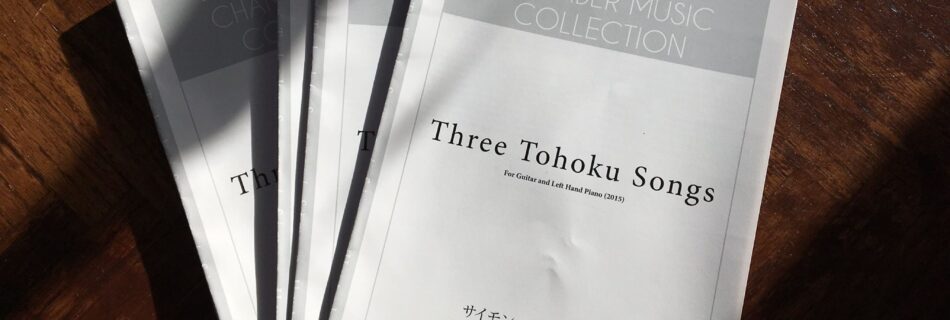
The Rosetta Ensemble has posted a new recording of my Three Tohoku Songs, a set of three reimaginings of folk songs of Northern Japan for guitar and piano left hand.
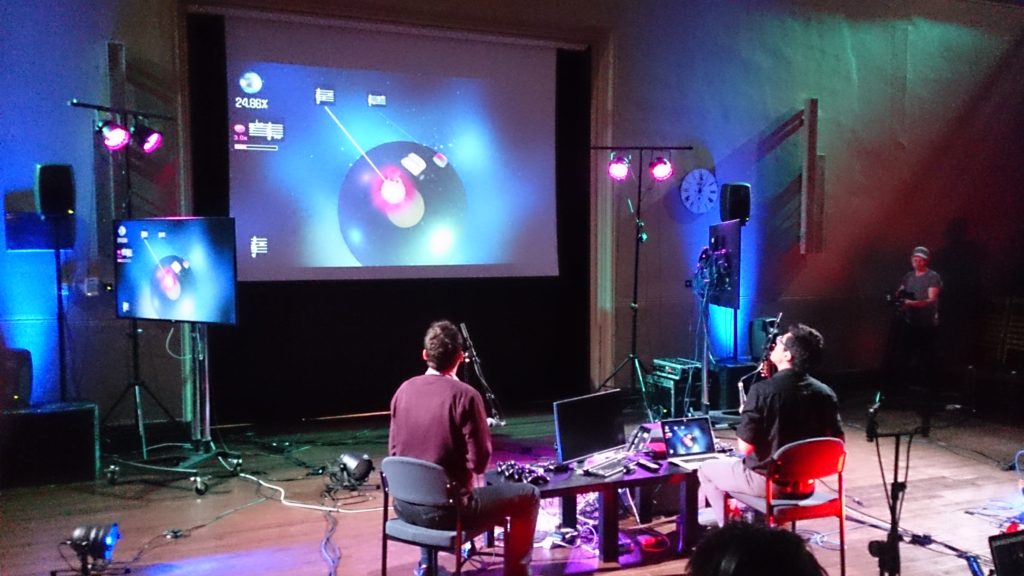
In order not to bury the lead, let me start by saying, Plurality Spring, a new game piece by me and Paul Turowski, is available for free download:
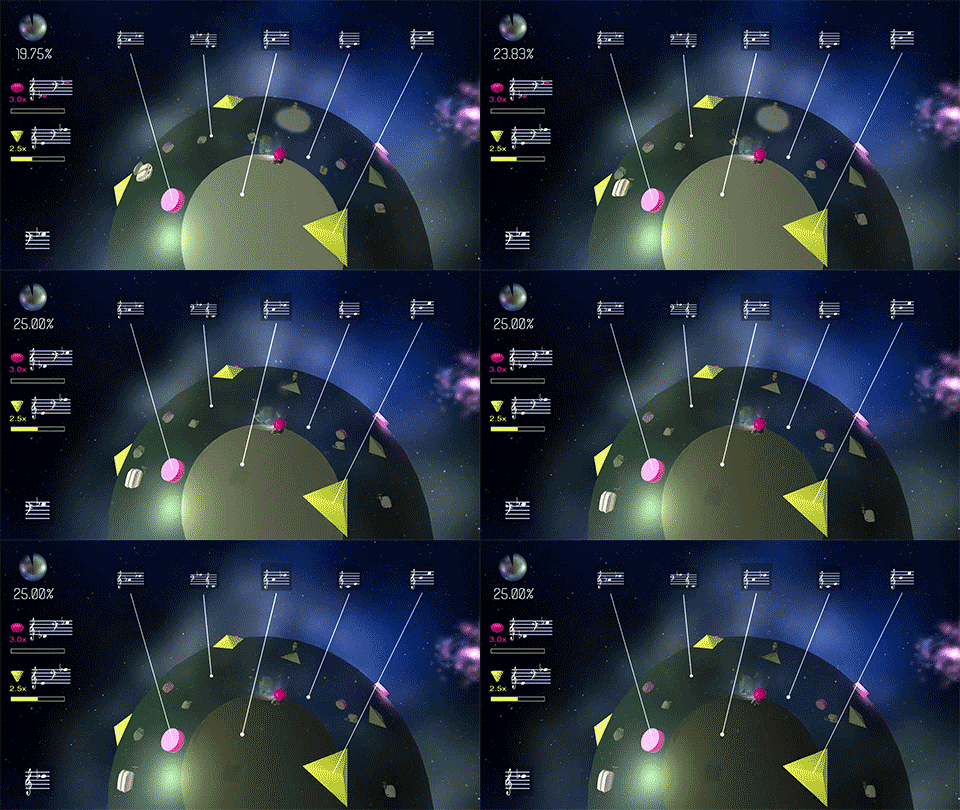
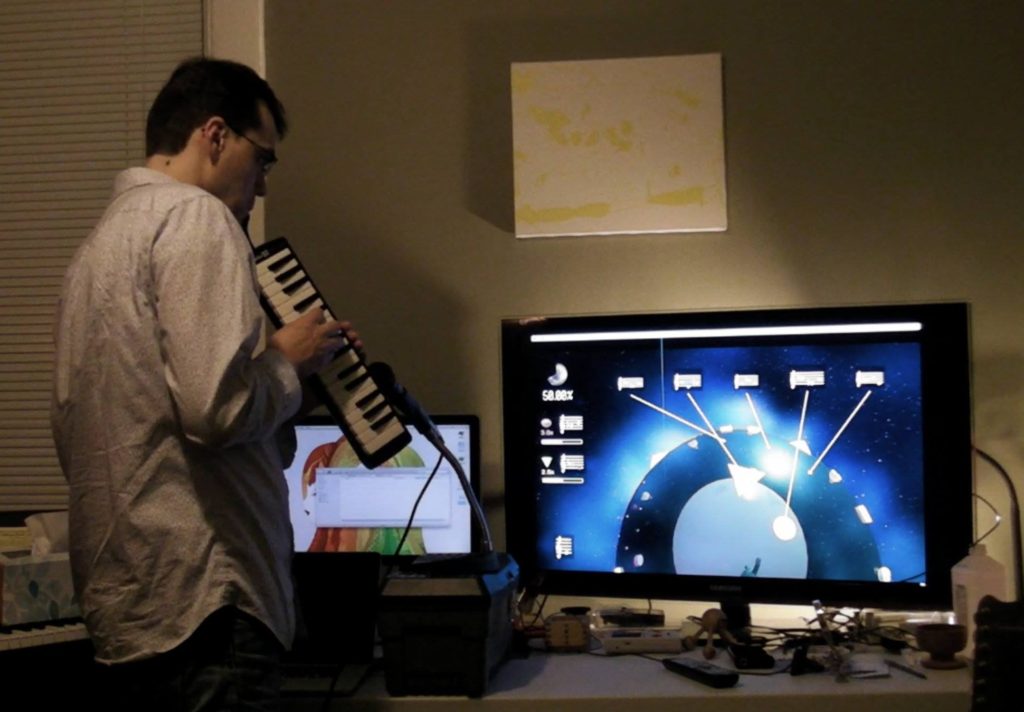
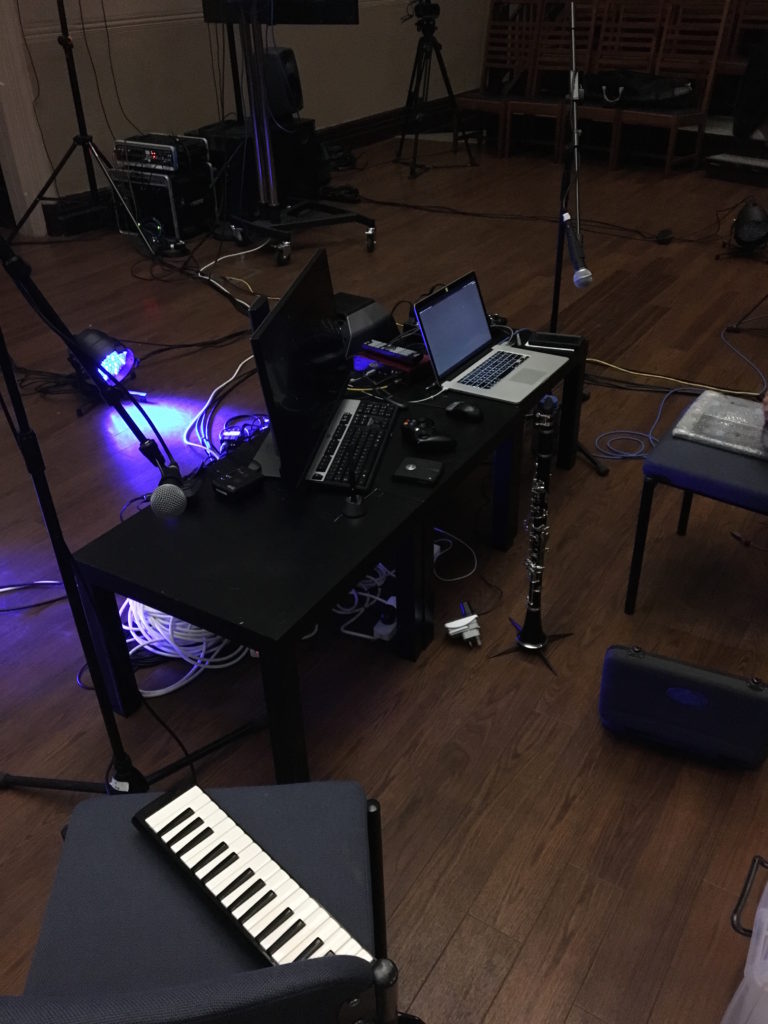
In the game, players use acoustic musical performance (via the computer’s microphone) to control robots exploring an orb in deep space.
This idea of a “game piece,” where an musical work emerges from performers playing within a set of rules, draws from historical models like John Zorn’s Cobra, or Christian Wolff’s For 1, 2, or 3 People. Since Plurality Spring is a digital video game, though, the performers’ live audio mixes with the in-game sound to create a kind of augmented reality performance piece (whether you perform in front of an audience or just on your own).
One of the things that was particularly enjoyable about the collaboration was both of our willingness to be flexible about the game as it evolved.
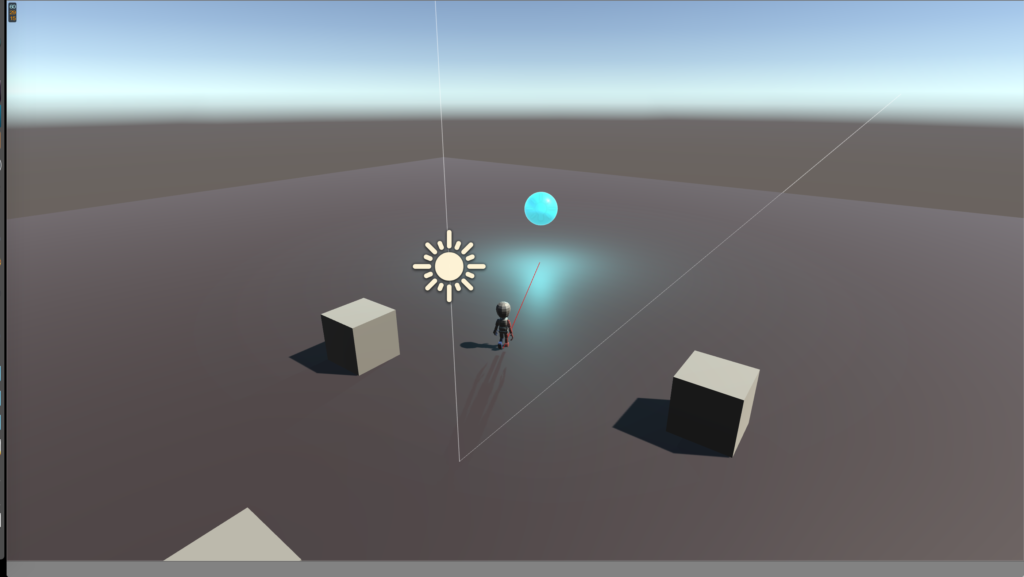
The game was originally about this “kid” following a glowing orb. The players directly controlled the orb, but not the kid.
Here is a screenshot of the early prototype:
It’s cute! It’s neat! But without picking apart our whole creative process (maybe another time…), ultimately we ended up with something very different, and ultimately much better.
Our “kid” became three robots, and the orb is no longer something players chase, it’s a traversable planet. Our aesthetic ideas, too, became much more developed, and we ended up with a really pleasing balance of cute and “gritty” in our final visual and audio design.
The Post Haste Reed Duo‘s debut album, “Beneath a canopy of angels… a River of Stars,” which includes my 2011 work, bioMechanics, has been getting some great press.